
Cryptid Files
Kitsune Cryptid: Mythology, Sightings, Evidence, and Meaning
In early March 2022, visitors to Nasu found the rope around one of Japan’s most storied rocks lying loose on the volcanic ground.
The boulder had split.
This was Sesshō-seki, the Killing Stone, a landmark tied to the legend of Tamamo-no-Mae, a court woman said in folklore to have concealed the true form of a nine-tailed fox. Japanese government interpretation at the site records the old story and places the stone among volcanic ground where sulfurous gases escape through the earth.[1] Contemporary reporting confirmed that the stone itself really had fractured, after cracks had already been visible for years.[13]
Nothing in the fracture proved that a fox spirit had escaped.
Yet photographs of the broken stone traveled rapidly, and a story carried for centuries suddenly felt close again.
That tension sits at the center of the Kitsune cryptid mystery.
Japan has real foxes. Museums preserve centuries-old images of supernatural foxes. Shrines keep living traditions in which fox messengers appear beside Inari. Historical texts and scholarship preserve stories of transformation and possession. Modern communities still trade accounts of fox-like apparitions and unexplained encounters.
The evidence is rich.
It simply does not all prove the same thing.
For IHeartCryptids, the most interesting path is not to force the Kitsune into a simple choice between real and unreal. It is to follow each layer of the story as far as the evidence allows, then stop where the evidence stops.
That path begins with an ordinary fox.
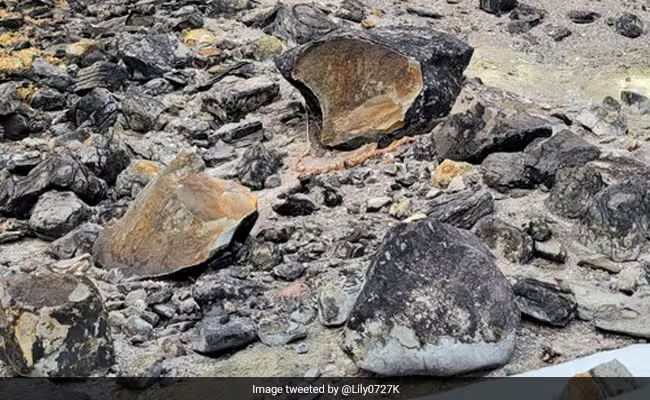
The split Sesshō-seki Killing Stone in Nasu after the 2022 fracture, photographed in its actual volcanic landscape rather than isolated against a blank background.
What Is a Kitsune Cryptid
The Japanese word kitsune means fox. In folklore, however, the animal can cross boundaries that an ordinary fox cannot. It may assume human form, deceive travelers, become a lover, haunt a household, appear through mysterious lights, or grow into the formidable nine-tailed creature preserved in art and legend.
Calling the Kitsune a cryptid creates an immediate problem.
A conventional cryptid claim usually asks whether an unknown physical animal exists. Bigfoot, an unidentified lake animal, or an alleged unknown canine can theoretically leave tracks, hair, tissue, bones, environmental DNA, photographs, or a body. The claim may be wrong, but it belongs to the physical world and can be tested there.
Traditional Kitsune stories often operate somewhere else.
A fox becomes a woman.
A court beauty hides an animal identity.
A person falls ill and the illness is interpreted as fox possession.
Unexplained lights become foxfire.
A wedding procession is linked to unusual weather.
These are not descriptions of a normal biological species with an unusual coat pattern. They are parts of a supernatural folklore tradition.
Japanese government cultural material uses yōkai as a broad term for supernatural beings and phenomena within Japanese culture.[16] The Kitsune fits naturally into that world when its supernatural qualities are being discussed.
Museum collections make the distinction even clearer.
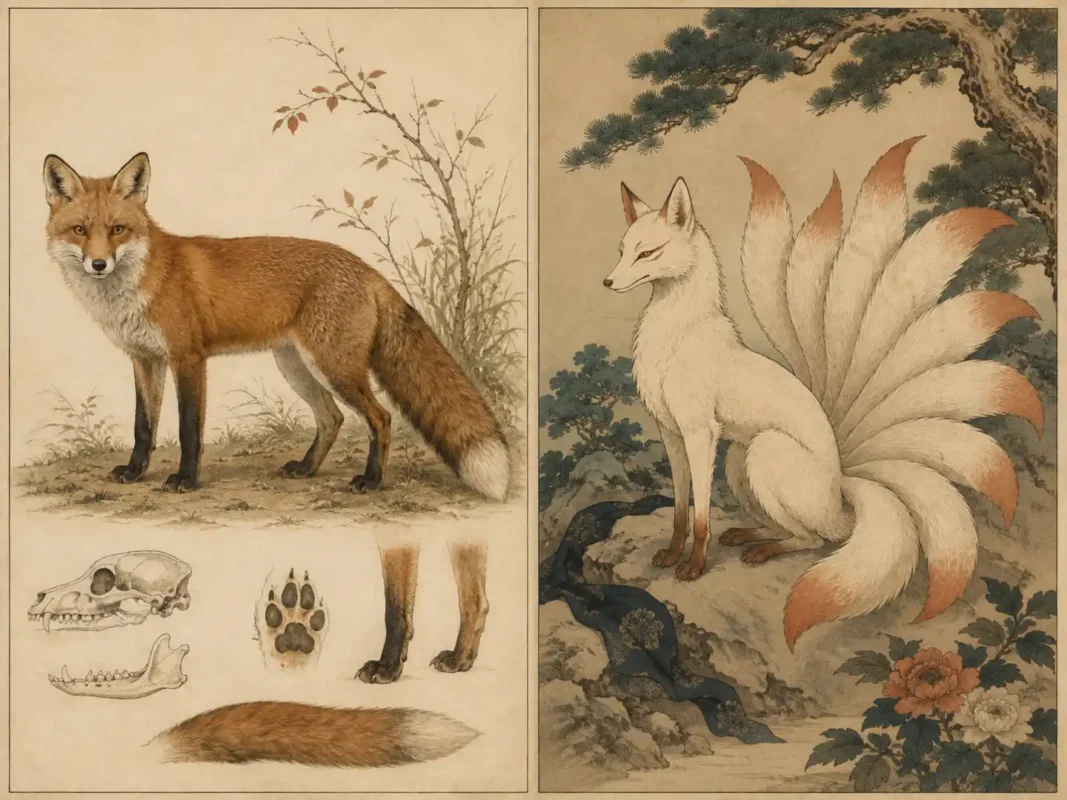
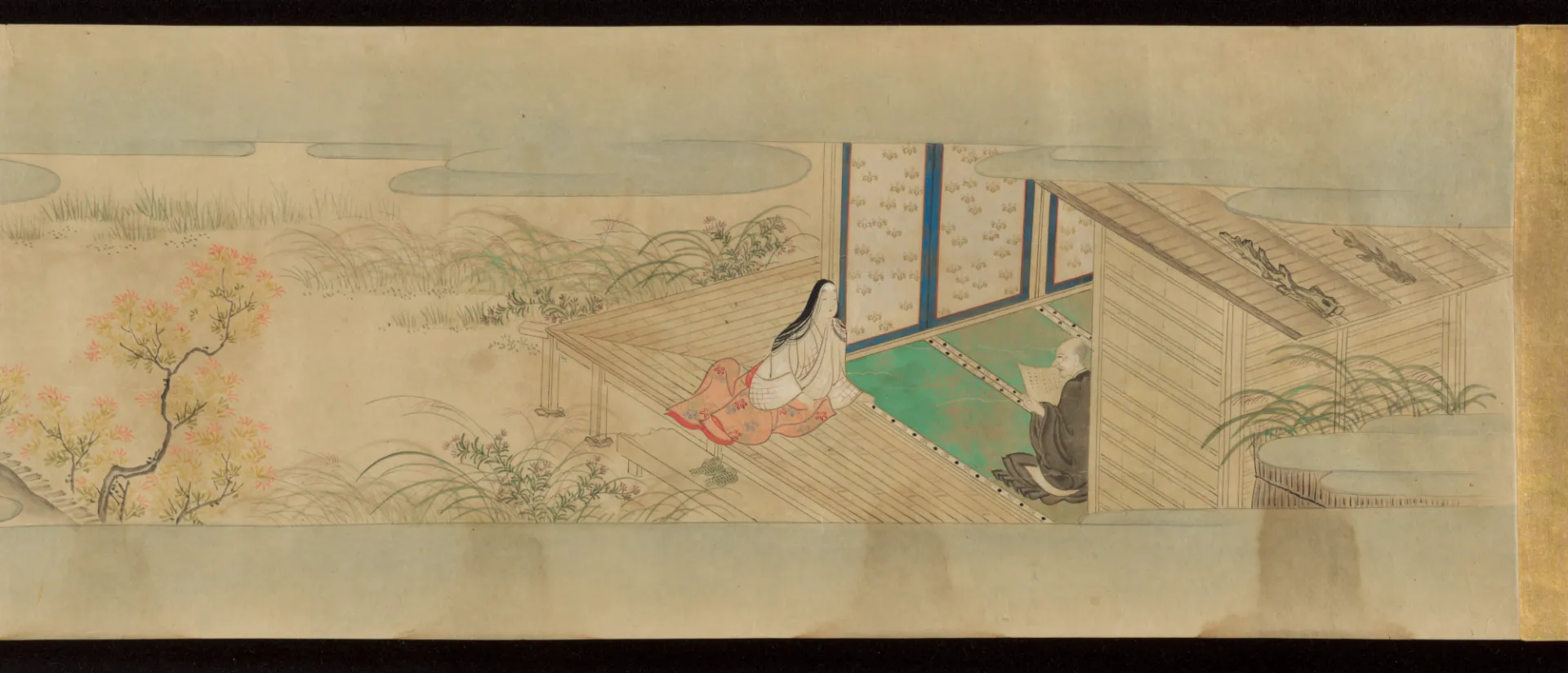
The Metropolitan Museum of Art preserves a 1669 handscroll known as Tale of the Fox, Kitsune no sōshi. In the story, a Buddhist monk encounters a beautiful woman who is later revealed as a fox. The object is historical. The artwork is real. The story is documented. The transformation itself belongs to the narrative.[4]
That is the first rule for reading Kitsune evidence.
A real document can preserve a supernatural claim without proving that the supernatural event occurred.
The same distinction applies throughout this subject.
| Layer | What Can Be Established |
|---|---|
| Real fox | Foxes live in Japan |
| Historical folklore | Supernatural fox stories have a documented history |
| Religious tradition | Fox messengers are associated with Inari worship |
| Art and theater | Kitsune and nine-tailed fox imagery appear in historical works |
| Modern encounter claim | People continue to report fox-like paranormal experiences |
| Biological supernatural Kitsune | No verified species has been established |
The phrase Kitsune cryptid is therefore most useful as a modern investigative question.
Could any strange physical encounters associated with Kitsune folklore involve misidentified wildlife, unusual animal behavior, environmental phenomena, hoaxes, memory distortion, or an unidentified organism?
That question can be investigated.
The older supernatural tradition should remain intact beside it rather than being rewritten as zoology.
A Kitsune may be called a fox spirit, a yōkai fox, a shapeshifter, a nine-tailed fox, or a supernatural fox depending on the story. None of those labels automatically describes a newly discovered animal.
The uncertainty is part of the case.
The Real Fox Behind the Legend
On a road in Hokkaido, the animal behind centuries of supernatural imagination may look surprisingly ordinary.
Pointed ears.
A narrow muzzle.
Reddish fur.
A long tail that changes dramatically between summer and winter.
The Japanese Ministry of the Environment identifies the Hokkaido red fox as Vulpes vulpes schrencki, a local subspecies of the red fox. Its Shiretoko visitor information gives an approximate head-and-body length of 60 centimeters, about 100 centimeters from the nose to the end of the tail, and a typical weight of 4 to 6 kilograms.[9]Hokkaido Red Fox Approximate Official Measurement Head and body length 60 cm Nose to tail tip 100 cm Weight 4–6 kg Scientific name Vulpes vulpes schrencki
The same Ministry source describes an omnivorous diet that can include insects, rodents, birds, fruit, carrion, and fish.[9]
Nothing in those measurements resembles a supernatural creature.
Yet the living fox already carries several features that can become powerful after dark.
The tail is large enough to dominate the silhouette. A winter coat changes the apparent bulk of the animal. A fox standing sideways in grass can lose part of its body behind vegetation while leaving sections of fur visible. The animal can stop, turn, and vanish into cover quickly.
The Ministry’s own ranger material shows how dramatically the fox’s appearance changes with seasonal shedding. Summer foxes may look thin and rough compared with their thick winter form even when they are not starving.[9]
That matters during a brief sighting.
A witness may see the animal for five seconds.
The light may be weak.
Grass may cover the legs.
The tail may move while a phone camera is exposing the frame.
The result can look stranger than the animal that produced it.
None of this proves that historical Kitsune stories began as wildlife misidentifications. Many of those stories are obviously supernatural narratives rather than field reports.
It does explain why a fox is such effective material for a boundary creature.
It lives close enough to people to be known.
It remains elusive enough to disappear.
Its shape changes with season, posture, distance, and light.
A fox does not need nine tails to leave a complicated memory.
There is also a practical reason not to approach one.
The Ministry of the Environment warns visitors not to feed Hokkaido foxes and not to handle foxes or their feces because of the risk associated with Echinococcus parasites. Feeding also encourages wildlife to approach roads and people, increasing danger to both foxes and humans.[9]
A strange fox should be observed from a distance.
Mystery is not improved by turning a wildlife encounter into a bite, infection, or road accident.
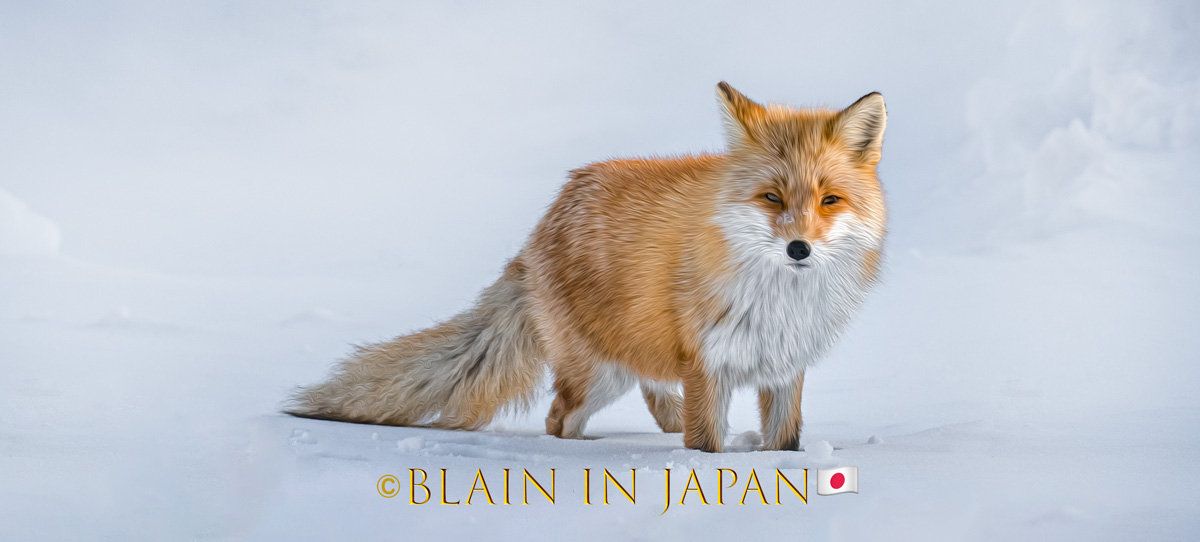
Hokkaido red fox in natural habitat during winter, showing the full tail and dense seasonal coat.
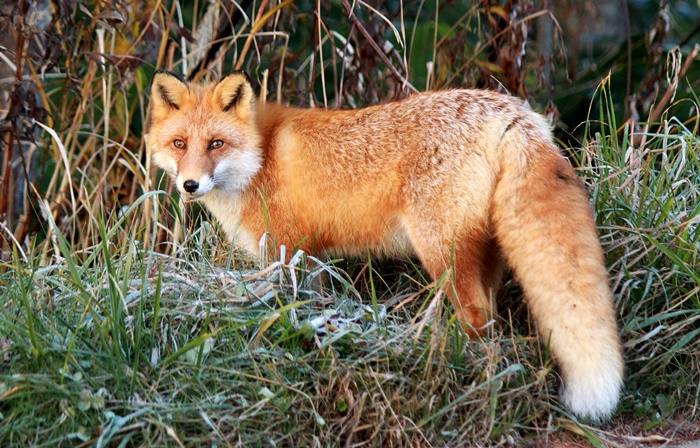
Hokkaido red fox summer coat Shiretoko
How the Kitsune Learned to Become Human
The most disturbing Kitsune stories rarely depend on a giant monster.
They depend on recognition arriving too late.
A traveler meets a woman.
A monk abandons discipline.
A husband notices something that should not be there.
A stranger enters a household.
Only later does the fox appear beneath the human face.
The 1669 Tale of the Fox preserved by the Metropolitan Museum follows this pattern. A Buddhist monk encounters a beautiful woman, becomes entangled with her, and eventually discovers her fox identity. The museum notes the story’s moral dimension, which turns transformation into more than a supernatural trick.[4]
The fox does not merely frighten the monk.
It exposes him.
That gives shapeshifting a narrative power that teeth and claws cannot provide.
A normal predator remains outside the house.
A shapeshifter can sit beside the fire.
It can marry into a family.
It can speak.
It can tempt.
It can deceive someone who believes he is looking directly at the truth.
Historical art shows how durable that idea became.
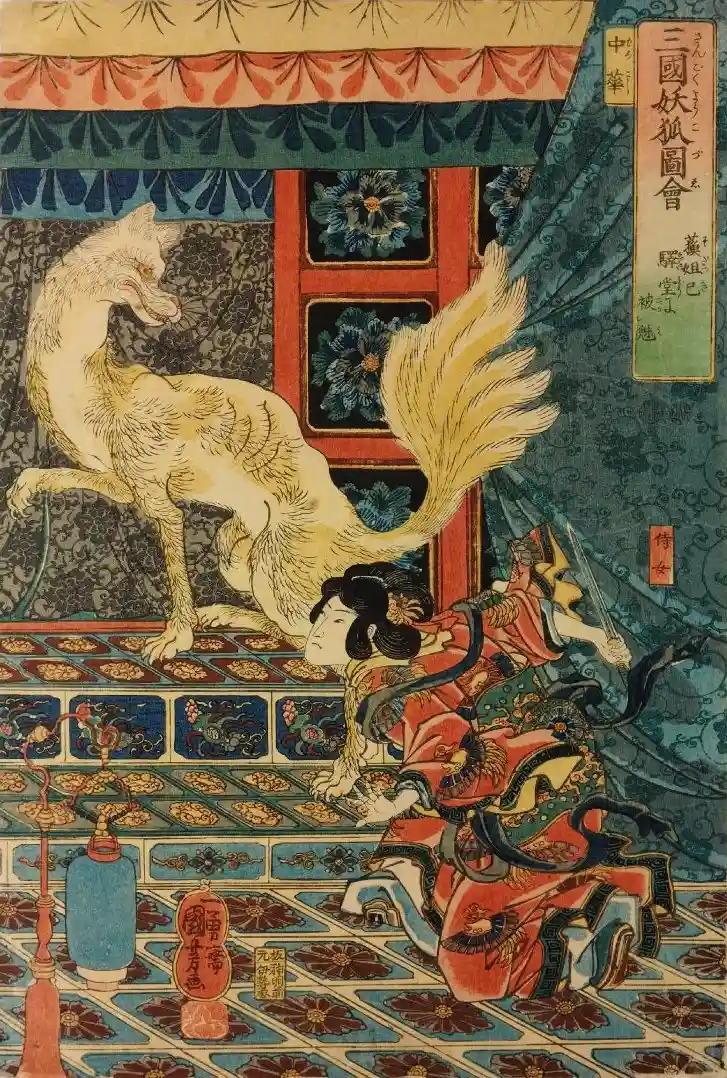
The Metropolitan Museum holds late Edo-period imagery of Tamamo-no-Mae changing into a nine-tailed fox, while the British Museum preserves Utagawa Kuniyoshi’s nineteenth-century series The Magic Fox of Three Countries. One print, dated 1849–1850, shows Lady Kayo resuming the form of a nine-tailed fox.[5][18]
The transformation motif also crossed into theater and popular visual culture.
That long history is worth keeping separate from modern fantasy rules.
Contemporary portrayals often give Kitsune fixed systems of powers: exact numbers of tails at exact ages, specific flame colors, combat abilities, magical classes, or standardized ranks.
Historical folklore is not a game manual.
Different stories give foxes different roles.
Some deceive.
Some help.
Some seduce.
Some possess.
Some become associated with sacred service.
Some carry enormous destructive power.
Others are comic.
A single rigid taxonomy can make the tradition easier to memorize while making it less accurate.
The older material is more fluid.
That fluidity may be the secret of the Kitsune’s survival.
The creature can be rewritten without losing its central tension.
Something familiar is hiding something else.
The fox tail under the robe is one version.
The unexplained light at the edge of a field is another.
The court woman who cannot be what she appears to be takes the idea to its most dangerous extreme.
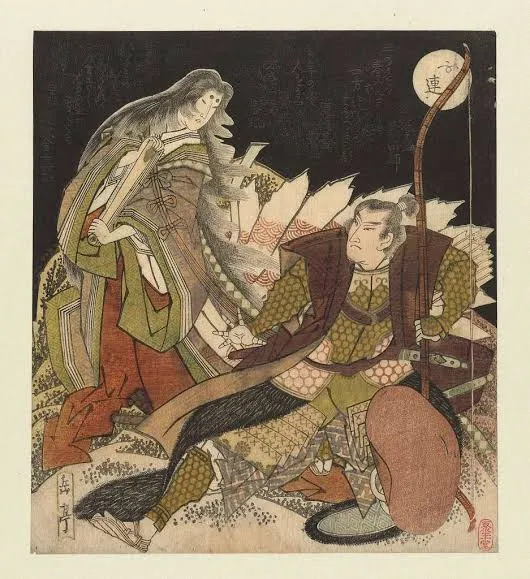
Metropolitan Museum Miura no suke Tamamo no Mae nine tails Gakutei
Why Nine Tails Became the Image Everyone Remembers
One tail belongs to the animal.
Nine belong to legend.
The nine-tailed fox is not unique to one modern franchise or one recent interpretation. Historical collections in Japan and abroad preserve the motif well before contemporary entertainment.
The British Museum’s 1849–1850 print by Utagawa Kuniyoshi shows Lady Kayo returning to her true form as a nine-tailed fox.[5] The museum identifies the work as part of Sangoku yōko zue, translated as The Magic Fox of Three Countries, a series that places supernatural fox stories across China, India, and Japan.[5]
Japanese government interpretation at Sesshō-seki also describes the oldest, wisest, and most powerful supernatural foxes in the local legend as having nine tails.[1]
The number therefore carries historical weight.
It should not be treated as biological anatomy.
A photograph of a fox that appears to have three, five, or nine tails can result from several ordinary mechanisms before an unknown species needs to be considered.
The tail may swing during a long exposure.
Computational photography may merge movement between frames.
Branches may line up behind the animal.
More than one fox may overlap.
Reflections may duplicate parts of the silhouette.
Grass may hide the body and leave several tail-like shapes exposed.
Image manipulation may add the rest.
A real nine-tailed mammal would produce problems far larger than a strange photograph.
The tails would need skeletal and muscular attachment.
They would affect balance and movement.
They would appear consistently from multiple angles.
The animal would eventually shed fur, leave biological material, breed, die, or appear more than once.
One clear original video from several viewpoints would matter more than hundreds of compressed reposts.
A body or verified tissue sample would matter more still.
The historical symbol and the zoological question therefore move in different directions.
Folklore asks what nine tails signify.
Biology asks where they attach.
The first question has centuries of material behind it.
The second has no verified specimen.
That gap is easy to lose when a powerful image becomes familiar.
A nine-tailed fox feels ancient because the image is ancient.
Ancient imagery is evidence for an old idea.
It is not automatically evidence for an old species.
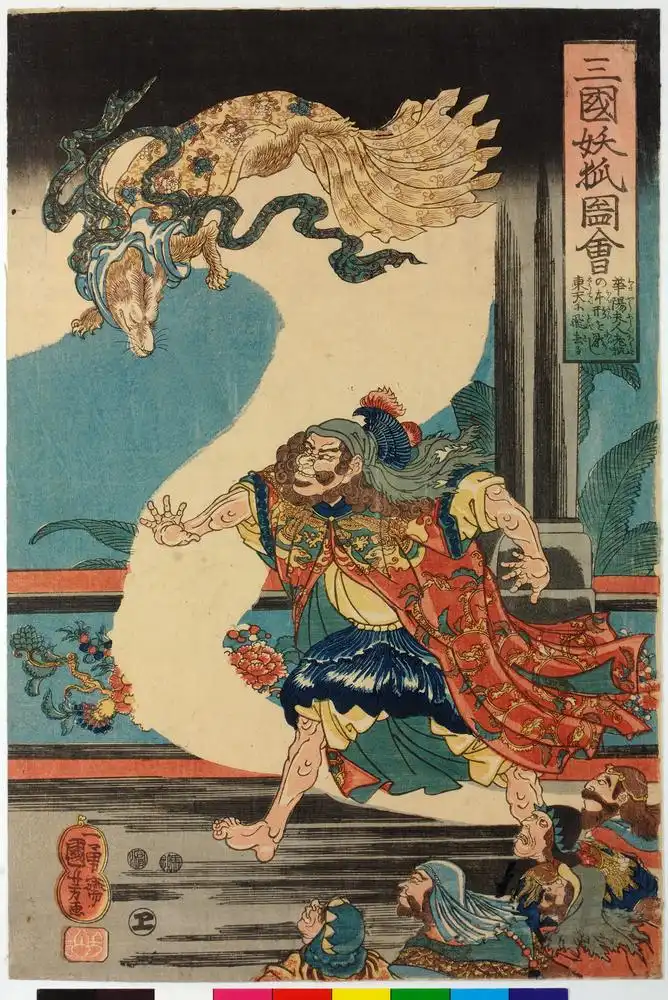
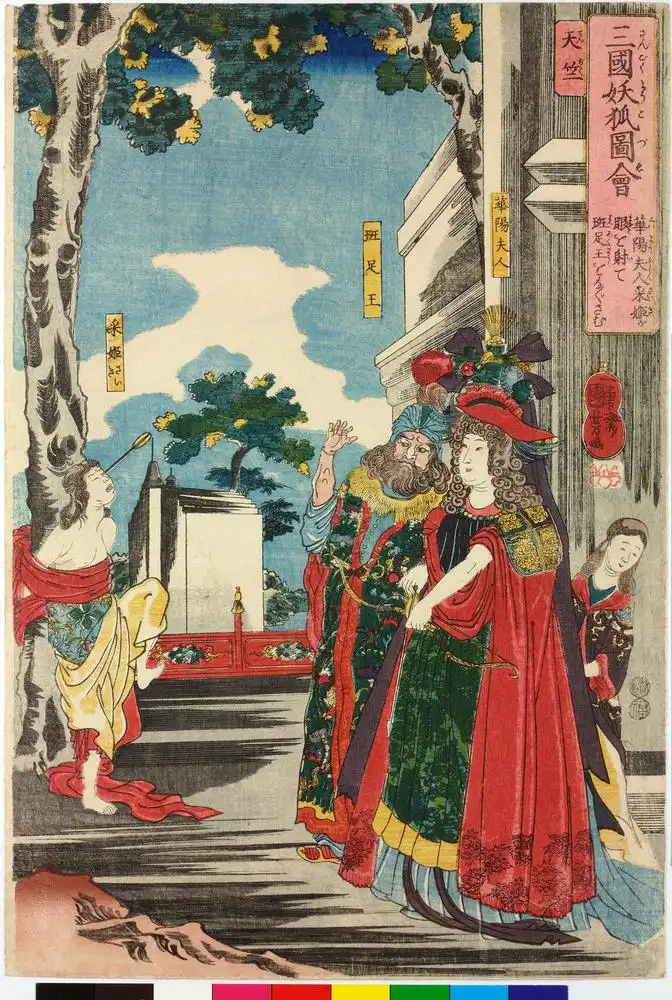
British Museum Lady Kayo nine tailed fox Kuniyoshi 1849 1850
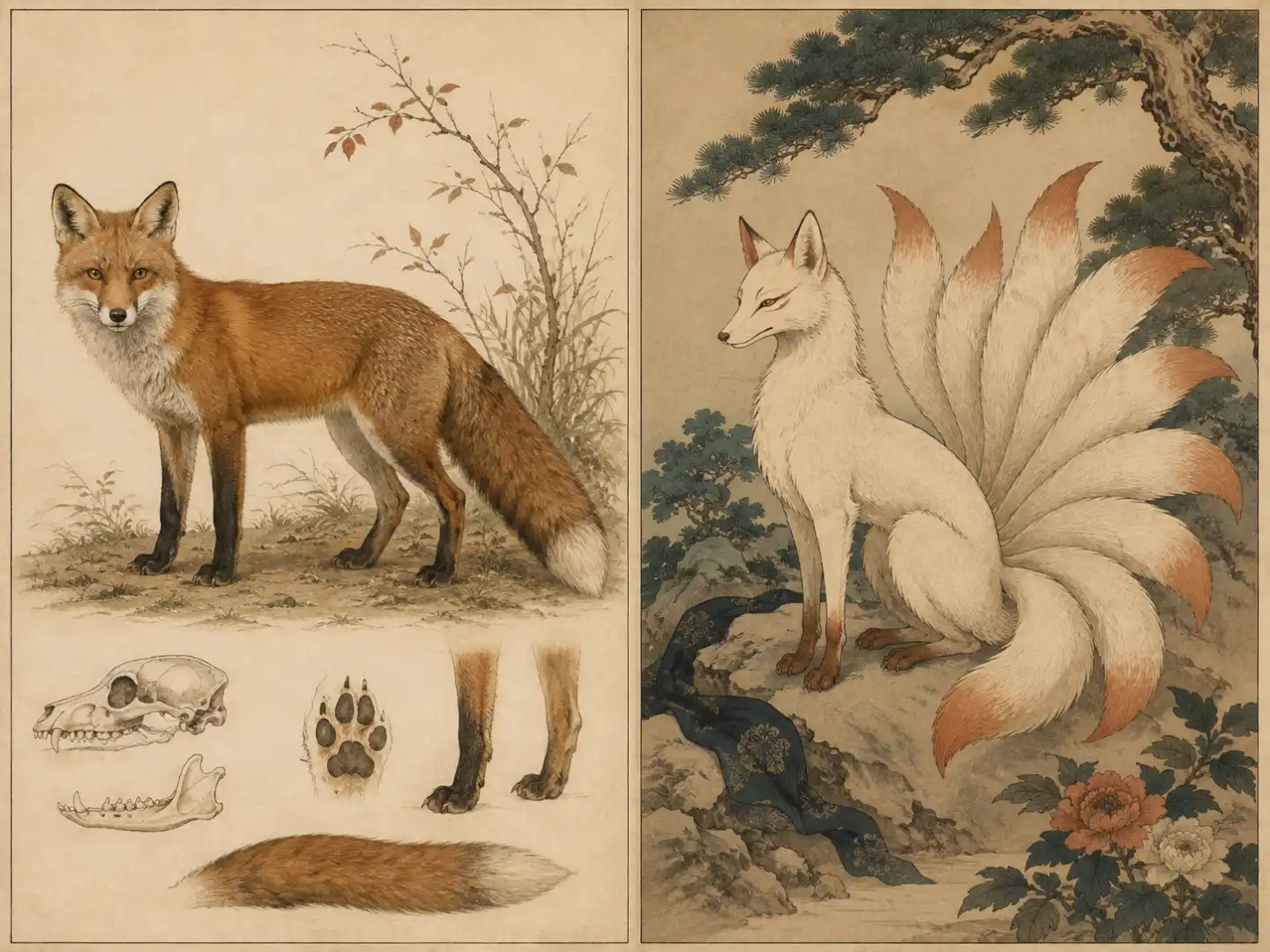
Field-guide comparison between one real red fox and the traditional nine-tailed supernatural form, clearly separated into zoology and folklore panels
Tamamo-no-Mae and the Road to Nasu
Among the many fox stories in Japan, Tamamo-no-Mae has left one of the clearest trails across art, landscape, and living cultural memory.
The story should be read as legend.
Within that legend, a golden nine-tailed fox takes the form of an elegant woman and enters the court of retired Emperor Toba. When illness strikes the ruler, the disguised fox is exposed and escapes to Nasu. The creature is hunted down, killed, and later associated with the stone known as Sesshō-seki.[1]
The Metropolitan Museum preserves an 1835 print titled Tamamo no Mae and the Archer Miura Kuranosuke. Its catalogue describes the nine-tailed fox arriving in Japan in female disguise, being detected, fleeing to Nasu, and becoming associated with the stone.[6]
Another Met print from the late 1820s catches the moment of transformation itself: the court woman and the fox occupy the same instant.[18]
Art turns the legend into something a viewer can witness.
Nasu gives it ground.
The official Japan Tourism Agency interpretation describes Sesshō-seki at the southeastern foot of Mount Chausu amid barren volcanic terrain. It records vents releasing sulfur dioxide and hydrogen sulfide and explains how toxic gas could kill small animals near the site.[1]
Suddenly, one element of the Killing Stone story becomes physical.
Something near the rocks really can kill.
Centuries before portable gas detectors, a traveler could encounter a place where the air smelled sharp, vegetation thinned, vapor moved over the ground, and insects or small animals lay dead.
The fox legend did not invent the volcanic landscape.
The landscape did not need the fox in order to be dangerous.
Together they created a place where supernatural explanation could feel supported by the ground itself.
The official interpretation also connects Matsuo Bashō with the site through his 1689 journey recorded in Oku no hosomichi, commonly known in English as The Narrow Road to the Deep North.[1]
A named poet.
A physical rock.
Volcanic gases.
A court legend.
Woodblock prints.
Later theater.
Modern tourism.
The story gains strength because each era leaves something behind.
Then the stone split.
On March 7, 2022, The Guardian reported that the famous rock had separated into two roughly equal pieces. Cracks had been visible for years, and local reporting cited the possibility that rain had entered and weakened the stone through ordinary weathering.[13]
The event created a nearly perfect collision between physical change and folklore.
The stone had not metaphorically broken.
It had actually broken.
The fox escaping remained the legend.
That difference is small enough to fit in one sentence and large enough to define the whole investigation.
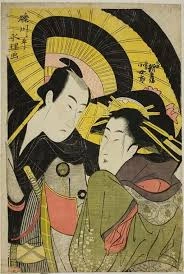
Metropolitan Museum Tamamo no Mae Archer Miura Kuranosuke 1835
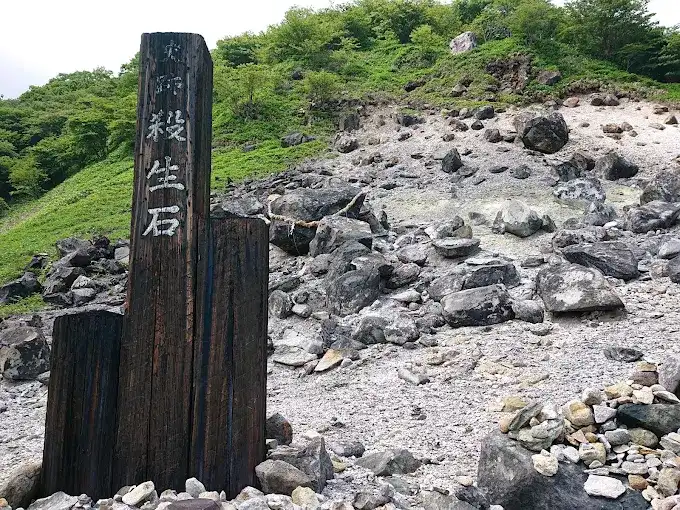
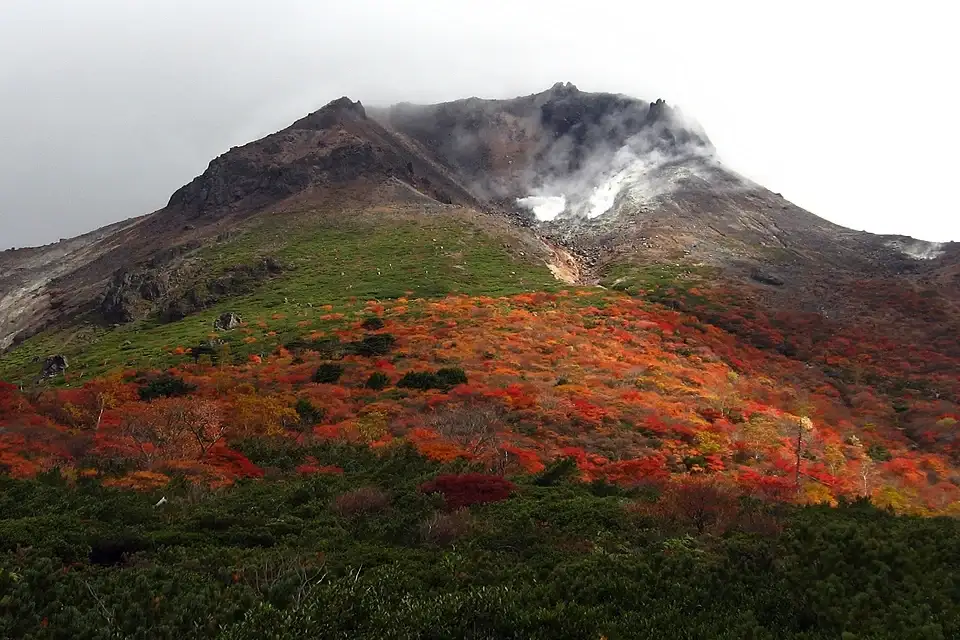
Sessho-seki Nasu Mount Chausu Tochigi map
The Killing Stone Is Stranger When the Geology Is Left Intact
There is a temptation in paranormal storytelling to remove ordinary explanations because they seem to weaken the atmosphere.
At Nasu, the opposite happens.
The geology makes the place stronger.
Government interpretation records sulfur dioxide and hydrogen sulfide around the volcanic vents near Sesshō-seki.[1]
Hydrogen sulfide does not need a demon to be dangerous.
A person standing in a volcanic area does not see a gas molecule leaving the ground.
They experience smell, irritation, dead organisms, bare earth, heat, and vapor.
The cause remains invisible.
That sensory structure has the shape of a supernatural story even before a storyteller adds one.
A place kills.
Nothing visible attacks.
A dangerous spirit becomes an understandable explanation in a world without modern atmospheric monitoring.
This does not reduce the Tamamo-no-Mae legend to a chemistry lesson.
Stories absorb more than one source.
Political anxieties, Buddhist themes, fox folklore, performance traditions, older East Asian supernatural fox narratives, local geography, and later artistic retellings all became entangled around the same figure.
Geology explains the deadly air.
It does not explain why the danger was given the face of a beautiful court woman.
That belongs elsewhere.
The distinction is useful far beyond Kitsune research.
A strange environmental event may preserve the seed of a legend without explaining the legend’s full form.
Lake waves can inspire monster reports without explaining every sighting.
Melting snow can distort tracks without explaining every footprint.
Owls can produce frightening calls without explaining every winged-creature story.
At Nasu, volcanic gas can account for a lethal landscape without accounting for a nine-tailed fox.
A careful investigation allows partial explanations.
It does not demand one mechanism for every detail.
The current tourism material from Tochigi Prefecture still presents Sesshō-seki as a major cultural and historical site connected with the nine-tailed fox legend.[14]
The story has also moved beyond the stone itself.
The Nasu Sesshōseki Gojinka Festival includes a torch procession from Nasu Yuzen Shrine to Sesshō-seki and performances linked to the nine-tailed fox tradition. The official tourism page listed the 2025 festival for May 25, with the procession continuing into the evening.[15]
The broken rock did not end the legend.
People still walk toward it carrying fire.
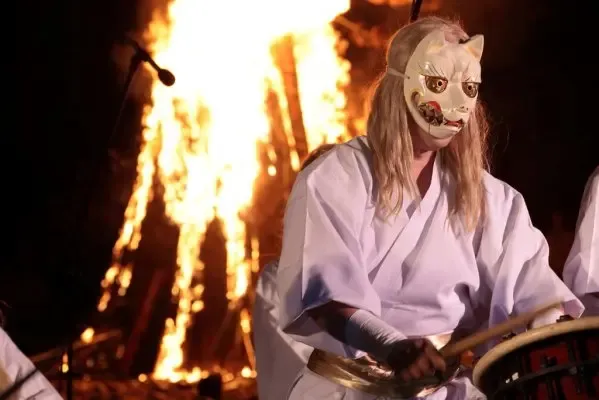
Nasu Sesshoseki Gojinka Festival torch procession nine tailed fox
Inari and the Foxes That Stand at the Shrine Gate
Walk into Fushimi Inari Taisha in Kyoto and foxes appear almost immediately.
Stone foxes sit near shrine buildings.
Others stand along paths beneath vermilion torii.
Some hold symbolic objects in their mouths.
The repetition is so strong that an unfamiliar visitor can leave with an easy conclusion: Inari must be a fox god.
The shrine itself rejects that shortcut.
Fushimi Inari Taisha explains that the foxes associated with Inari Okami are messengers or kindreds of the deity. Its official FAQ also states that these sacred foxes are not ordinary wild foxes and that Inari Okami is not a fox.[3]
The shrine dates the enshrinement of Inari Okami there to 711 AD and celebrated the 1,300th anniversary in 2011.[2] Its official material describes Fushimi Inari as the head shrine of a tradition with around 30,000 Inari shrines across Japan.[2][3]
That scale explains why fox imagery is so visible.
It also explains why several different ideas are often collapsed together.
A wild fox is an animal.
A supernatural Kitsune belongs to folklore.
A fox appearing as an Inari messenger belongs to religious symbolism and practice.
Inari Okami is the deity.
Those layers can overlap historically without becoming identical.
Academic work on Inari worship shows just how flexible the relationship can be. Karen A. Smyers examined the personalization of Inari worship and the place of fox symbolism within it, describing a religious world in which local practice and personal interpretation can vary considerably.[10]
The fox works well in such a landscape because it already occupies boundaries.
It is wild but can live near people.
It appears at dawn and dusk.
It moves between cultivated land and less controlled spaces.
It is familiar enough to recognize and elusive enough to carry mystery.
A stone fox statue therefore cannot be treated as evidence of a cryptid.
It is evidence of religious iconography.
That evidence is still important.
A mistake often occurs when only biological evidence is considered real evidence.
A shrine statue is real.
A woodblock print is real.
A historical text is real.
A possession account is real as an account.
The question is what each item proves.
The shrine statue proves that fox symbolism matters within an existing religious tradition.
It does not prove that a supernatural fox was photographed beside the torii at midnight.
Those are separate claims.
Keeping them separate allows both to remain interesting.
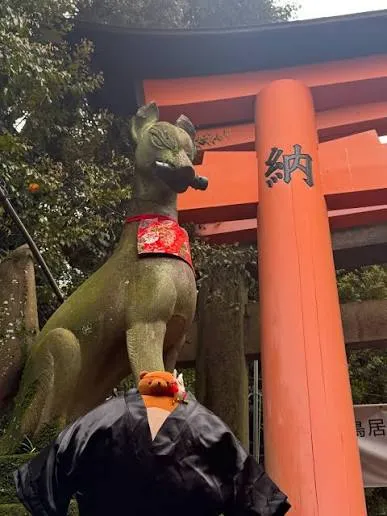
Fushimi Inari Taisha fox messenger statue Kyoto torii
Foxfire After Dark
At night, the Kitsune loses its body.
What remains is light.
Kitsunebi, often translated as foxfire, appears in Japanese folklore as mysterious lights associated with foxes. One of its most famous visual records comes from Utagawa Hiroshige.
His circa 1857 print New Year’s Eve Foxfires at the Changing Tree, Ōji shows foxes gathering before paying homage at Ōji Inari Shrine. The Metropolitan Museum explains that the foxes have set foxfires along the route and that farmers counted the lights in connection with predictions about the coming rice harvest.[7]
Look closely at what the image contains.
Dark fields.
A distant tree.
Small flames floating in groups.
Fox bodies emerging from the darkness.
A sacred destination.
Agriculture.
Divination.
The fox is no longer merely an animal.
It has become part of the landscape’s information system.
The lights are read.
They mean something.
Modern investigation begins from a colder position.
A light seen at night is evidence of a light seen at night.
Its cause may be distant lamps, reflections, small fires, atmospheric effects, vehicles, people hidden by vegetation, or another source that cannot be reconstructed later.
Depth perception weakens in darkness.
The source of a light may be much farther away than it appears.
Mist can enlarge it.
Movement by the observer can make a reflection appear to move independently.
Trees may hide the carrier while leaving the light visible.
None of these mechanisms can be retroactively assigned to every historical kitsunebi story.
The original conditions are gone.
Some accounts are art, some folklore, some local belief, and some may have begun with actual unexplained observations.
Hiroshige’s print does not solve the lights.
It preserves what the lights meant.
That may be more valuable.
A modern photograph tells investigators what one camera recorded on one night.
A nineteenth-century print can show how an entire cultural idea had already taken form.
The two types of evidence answer different questions.
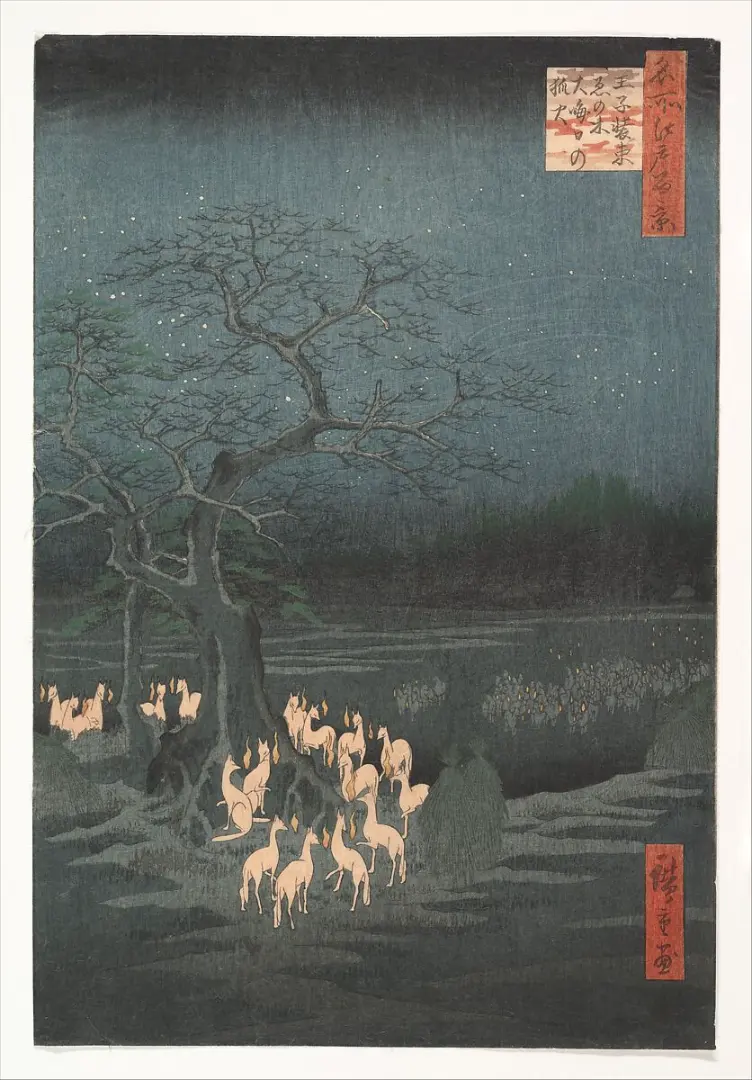
Metropolitan Museum Hiroshige New Years Eve Foxfires Oji 1857
When Sunlight and Rain Become a Fox Wedding
Rain falls.
The sun remains visible.
For a moment, the weather seems to contradict itself.
Japanese cultural usage connects such a sunshower with the expression kitsune no yomeiri, literally a fox’s wedding. The Japan Foundation explains the phrase in material for the performance Misty Mansion, describing it as an expression used when the sun shines while rain is falling.[11]
The image fits the Kitsune unusually well.
Two conditions occupy the same moment.
Clear sky and rain.
Animal and human.
Truth and disguise.
The living world and the spirit world.
A wedding itself is already a crossing from one social state into another. Place that ceremony inside contradictory weather and the fox becomes almost inevitable.
Meteorology does not require a supernatural procession.
A sunshower can occur when rain falls from one cloud while sunlight reaches the observer from another direction.
Folklore does something different with the experience.
It gives the contradiction a procession, lanterns, masks, secrecy, and rules.
A child should not watch.
A traveler may glimpse something not meant for human eyes.
The natural explanation describes how water and sunlight share the sky.
The story explains why the moment feels as though two worlds have overlapped.
That distinction is visible in modern film.
Akira Kurosawa’s Dreams presents eight dreamlike episodes, and the segment commonly known as Sunshine Through the Rain centers on a child encountering a fox wedding during a sunshower.[17] Warner Bros describes the 1990 film as a sequence of eight episodes shaped by Kurosawa’s imagery and concerns.[17]
The sequence has become one of the most recognizable modern visual interpretations of the fox-wedding motif.
It is cinema, not documentary evidence.
Its value lies in showing how an older idea can still be understood without explanation.
The rain begins.
The foxes walk.
The viewer already senses that the child has crossed a boundary.
Akira Kurosawa Dreams Sunshine Through the Rain fox wedding
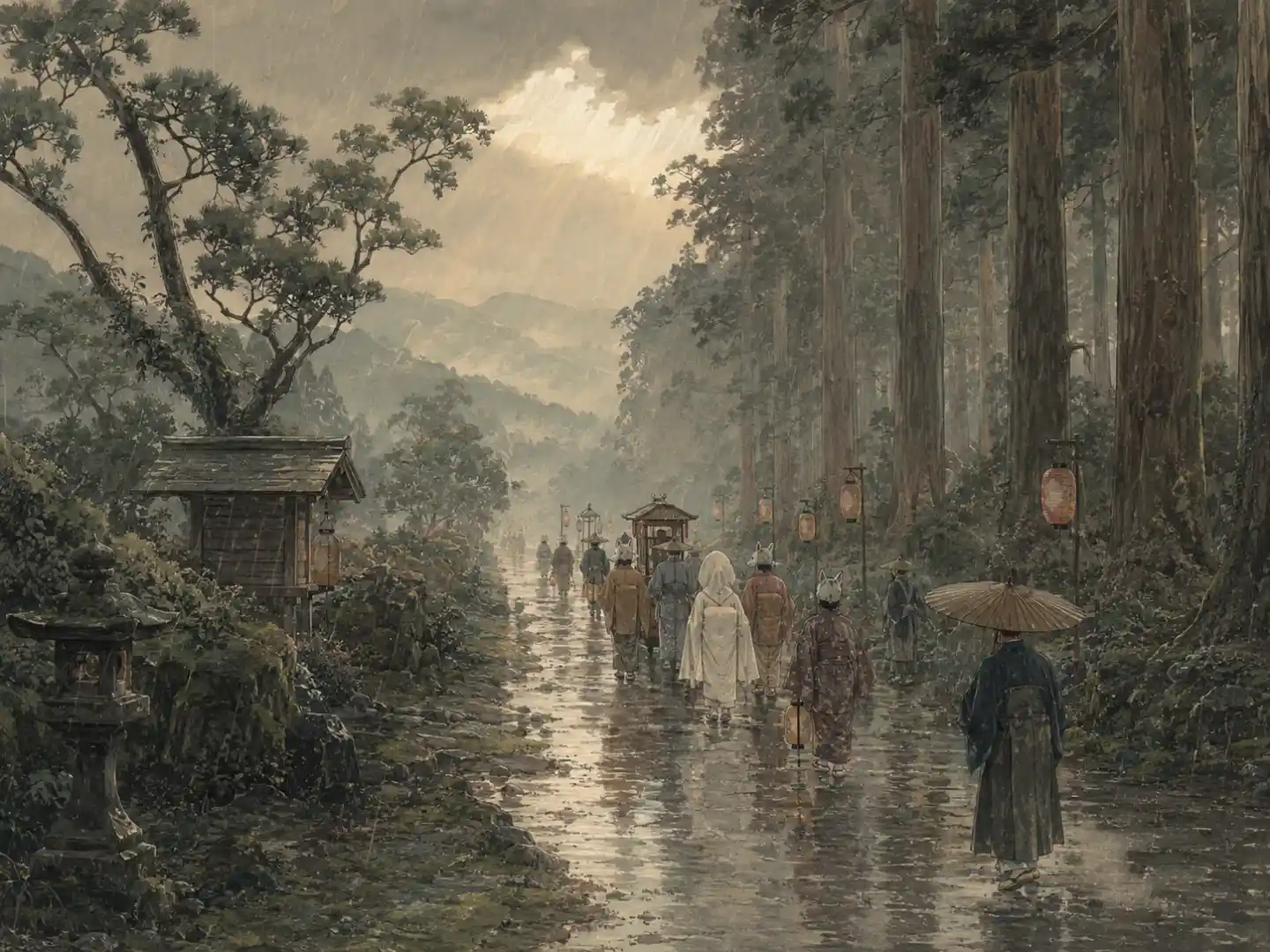
Restrained historical-style reconstruction of a fox wedding during a sunshower, emphasizing atmosphere rather than fantasy spectacle.
Kitsunetsuki and the Fox That Entered the Body
Some Kitsune stories move indoors.
The animal disappears entirely.
The person becomes the evidence.
Kitsunetsuki refers to traditions of fox possession in Japan. A 2024 study by Akiko Mieda and Keiko Wells in the Ritsumeikan University repository examines fox-possession belief in medieval Japan and describes cases in which illness among politically powerful people was interpreted through a framework of possession and treated through religious or ritual practices.[8]
These records are historically valuable.
They should not be turned into modern diagnosis.
A medieval account in which a community identifies a fox spirit as the cause of illness establishes that the interpretation existed.
It does not establish the supernatural mechanism.
The distinction matters because the subject is a person rather than a distant animal.
Seizures, hallucinations, confusion, severe behavioral changes, sleep disorders, neurological illness, psychiatric conditions, intoxication, infection, and other medical problems can require professional evaluation.
A folklore label should never replace that evaluation.
The older cases still tell us something important about witness evidence.
No experience arrives without a vocabulary.
People interpret what happens through concepts already available to them.
A culture familiar with fox possession may name a cluster of symptoms one way.
A different culture may use demons, ghosts, curses, spirits, or another explanation.
The event may be remembered sincerely in every case.
Sincerity cannot determine cause by itself.
The same problem appears constantly in cryptid research.
A witness sees something confusing.
Memory needs a shape.
Culture provides one.
A person familiar with Bigfoot may remember a tall dark figure as Bigfoot.
Someone steeped in alien-abduction stories may interpret missing time differently.
A person familiar with Kitsune lore may see a pale fox, an odd light, and a later coincidence as parts of one encounter.
That does not mean the witness is dishonest.
It means interpretation begins before the story is ever written down.
Historical possession material should therefore be handled with two kinds of respect.
Respect for the culture that produced the account.
Respect for the person who may have been suffering.
There is no need to mock the past or repeat its diagnosis uncritically.
Both mistakes flatten the evidence.
Japanese kitsune fox possession historical print museum
Modern Kitsune Sightings and the Problem of a Story Without a Source
The internet has not ended Kitsune encounters.
It has multiplied them.
Paranormal communities contain reports of fox spirits, fox-like apparitions, animals behaving in unusual ways, dreams, glowing figures, shapeshifters, and creatures interpreted through Kitsune folklore.
A Reddit discussion titled Kitsune in the modern day asks directly about contemporary Kitsune stories.[20] Another post in r/Paranormal describes a supposed fox-spirit sighting remembered many years after the event.[20] These posts establish that modern claims exist. They do not independently verify the entities described in them.[20]
That difference becomes crucial online.
A story may begin with one witness.
A second website summarizes it.
A video retells the summary.
A social account clips the video.
A database lists the case.
Another article cites the database.
Soon the same story appears in ten places.
It has not become ten witnesses.
Source repetition can imitate corroboration.
The original account may even disappear while the copies survive.
A modern Kitsune report becomes more valuable when several things remain intact:
the identity of the witness,
the original date,
the exact location,
the first version of the story,
original media files,
independent witnesses,
environmental conditions,
and any physical trace.
Remove those elements one by one and the case slowly turns into folklore.
That transformation can happen in only a few years.
Consider a hypothetical report.
A driver sees a pale fox beside a road at 1:20 a.m.
The animal appears to have several tails.
A passenger photographs it.
The original image is preserved.
The exact location is known.
A traffic camera records an animal at the same time.
Tracks are found the next morning.
That case can be investigated.
Now change the conditions.
Someone remembers a friend describing a white nine-tailed fox twenty years ago.
No name.
No date.
No photograph.
No location.
No original witness.
The story may still be enjoyable.
Its biological value is extremely low.
Modern cryptid research often fails because those two cases are treated as equivalent.
They are not.
The IHeartCryptids Evidence Scale
The following scale is an editorial framework for organizing claims. It is not a formal scientific standard.
| Level | Evidence | Example |
|---|---|---|
| 1 | Untraceable story | Reposted account with no original witness |
| 2 | Firsthand testimony | Named witness with a stable account |
| 3 | Original testable evidence | Original photo, video, tracks, hair, environmental record |
| 4 | Independent corroboration | Multiple witnesses or records that did not influence one another |
| 5 | Biological confirmation | Verified tissue, DNA, specimen, or reproducible scientific documentation |
The Kitsune occupies an unusual position on this scale.
Its cultural evidence is exceptionally strong.
Museums hold historical artworks.
Government institutions describe named legends.
Academic research examines possession beliefs.
Living shrines preserve fox symbolism.
Physical places remain visitable.
Its supernatural zoological evidence remains weak.
There is no verified specimen of a shapeshifting fox.
No established biological population of nine-tailed mammals.
No reproducible demonstration of fox-to-human transformation.
No authenticated evidence that supernatural foxfire is produced by a biological fox.
A long cultural history does not compensate for missing biological evidence.
It answers another question.
The Kitsune is unquestionably real as a cultural figure.
The organism described by its most supernatural stories has not been established.
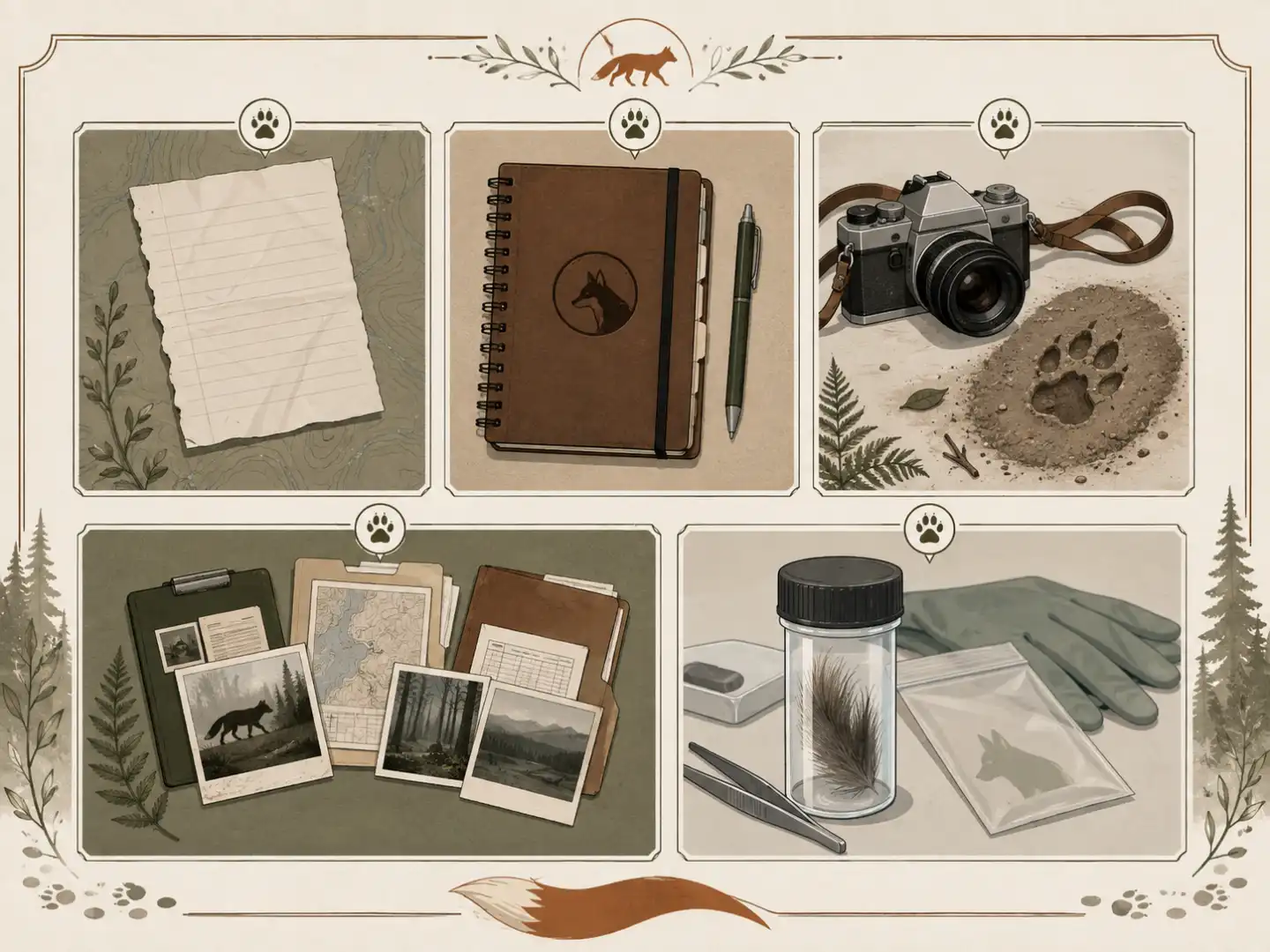
Five-stage cryptid evidence ladder from anonymous story to confirmed biological specimen.
What Could Produce a Kitsune-Like Encounter Without a Supernatural Fox
A fox crosses a road at dusk.
The sighting lasts four seconds.
Its tail divides behind several branches.
A reflective marker glows beyond it.
The witness turns the car around.
The animal is gone.
Nothing in that sequence requires deception by the witness.
Nothing requires a supernatural fox either.
Several ordinary effects can produce an encounter that feels much larger than its ingredients.
Low light removes detail first.
Color weakens.
Edges soften.
Distance becomes harder to judge.
A moving tail can blur.
Several foxes standing close together can produce a body shape that seems anatomically impossible.
Vegetation can hide the central part of an animal while leaving separated patches of fur visible.
Seasonal coat changes can alter the animal’s apparent size.[9]
Then there is memory.
A witness does not store a perfect video.
The brain reconstructs.
Later information can enter the reconstruction.
Someone who first describes the animal as a weird fox may encounter Kitsune imagery days later and begin remembering the tails as clearer than they originally appeared.
This does not have to be conscious.
The same thing happens in ordinary memory.
Light adds another layer.
A distant lamp may appear attached to an animal because depth is hard to judge at night.
A wet road can reflect headlights.
Mist can enlarge a source.
A moving observer can make a reflection seem to move.
A fox near the light becomes part of the same remembered scene.
Soon the report contains foxfire.
There are weaknesses in natural explanations too.
Saying it was probably a fox is not enough if the witness describes an animal twice the size of any local fox, observed for ten minutes in daylight from close range by several independent people.
Motion blur cannot explain a clear multi-angle video.
Branches cannot explain physical tracks that show a genuinely unknown foot structure.
Memory distortion cannot explain a fresh tissue sample.
Every explanation has limits.
Good investigation searches for those limits.
The goal is not to replace every Kitsune story with an ordinary fox.
It is to find the point at which the ordinary explanation stops working.
If nothing remains after testing, the case becomes understood.
If something remains, it becomes more interesting.
Unexplained is a valid result.
It is also narrower than supernatural.
That one word keeps an investigation open without pretending the answer has already arrived.
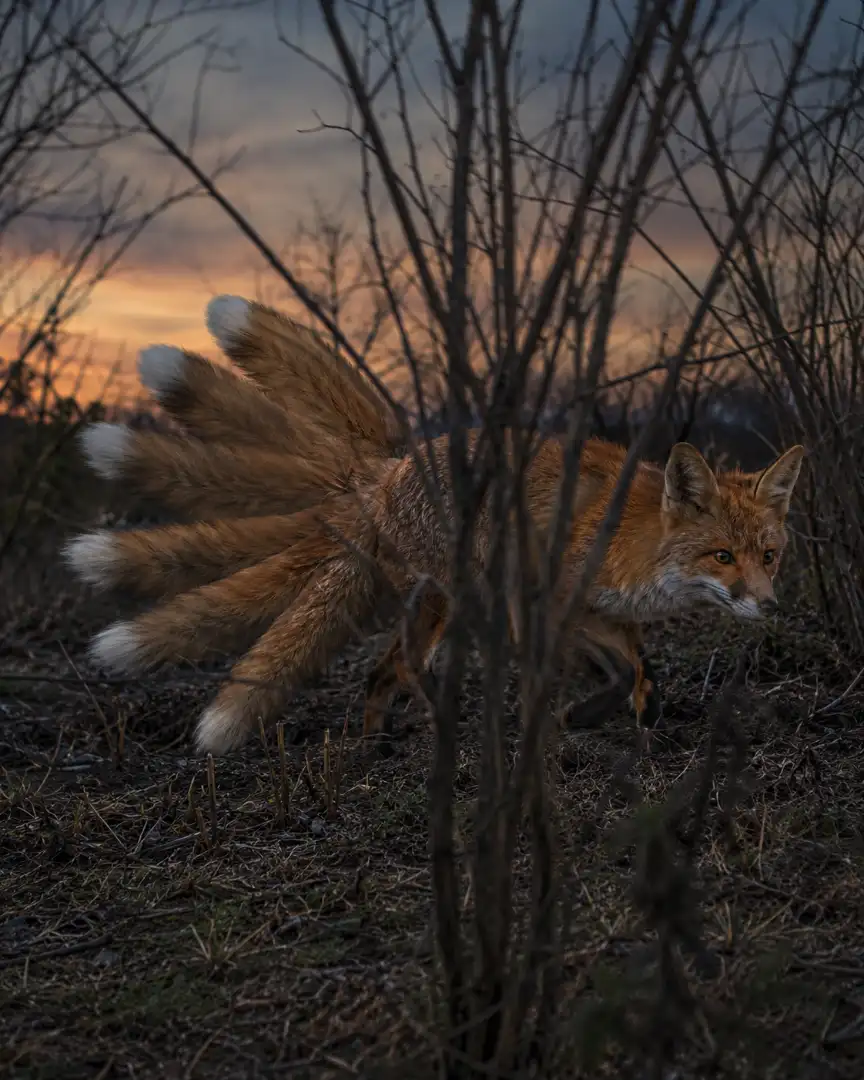
Forensic reconstruction showing how one fox moving behind branches can appear to have several tails in a low-light photograph.
Kitsune, Kumiho, Dogman, Skinwalker, and Tanuki Are Not the Same Story
Shapeshifting creates easy comparisons.
Culture makes them difficult.
The Korean gumiho or kumiho shares the famous nine-tailed fox image and belongs to a broader East Asian family of supernatural fox traditions. Visual similarity makes it the closest comparison to Kitsune.
That does not make the two names interchangeable.
Stories change as they move between languages, religions, courts, villages, literary traditions, theater, and modern media.
The Japanese Kitsune developed alongside specifically Japanese religious and folklore contexts, including the complex relationship between fox imagery and Inari worship.
The gumiho belongs to Korean cultural history.
The overlap deserves study.
The differences deserve preservation.
Dogman belongs to a very different type of modern claim.
Dogman reports are generally framed as encounters with a physical canine-like humanoid. The central question is often zoological: did a witness encounter an unknown animal?
Kitsune stories frequently move beyond physical anatomy.
The fox changes identity.
It may become human.
It may be spiritual.
It may possess.
It may manipulate perception.
The same investigative tools cannot test every part of such a tradition.
Tanuki presents another useful comparison.
The tanuki is based on a real Japanese raccoon dog, yet Japanese folklore gives the animal supernatural and trickster qualities. The pattern resembles Kitsune in one important respect: a real animal and a supernatural cultural figure occupy the same name without becoming the same thing.
The comparison with skinwalker needs greater care.
The term belongs to a culturally specific Diné or Navajo context involving witchcraft traditions. Turning it into a generic word for any shapeshifting monster strips away that context.
A Kitsune is not simply a Japanese skinwalker.
Similar behavior inside a story does not erase the history surrounding the story.
| Figure | Cultural Setting | Main Motif |
|---|---|---|
| Kitsune | Japan | Supernatural fox, transformation, trickery, possession, sacred associations |
| Gumiho | Korea | Nine-tailed supernatural fox and transformation |
| Dogman | Modern cryptid culture | Alleged physical upright canine |
| Tanuki | Japan | Real raccoon dog plus transformation and trickster folklore |
| Skinwalker | Diné or Navajo cultural tradition | Culturally specific witchcraft tradition, not a generic cryptid |
Comparisons become useful only after the differences are kept intact.
Otherwise every shapeshifter becomes the same creature wearing a different name.
That destroys the very history that made each one recognizable.
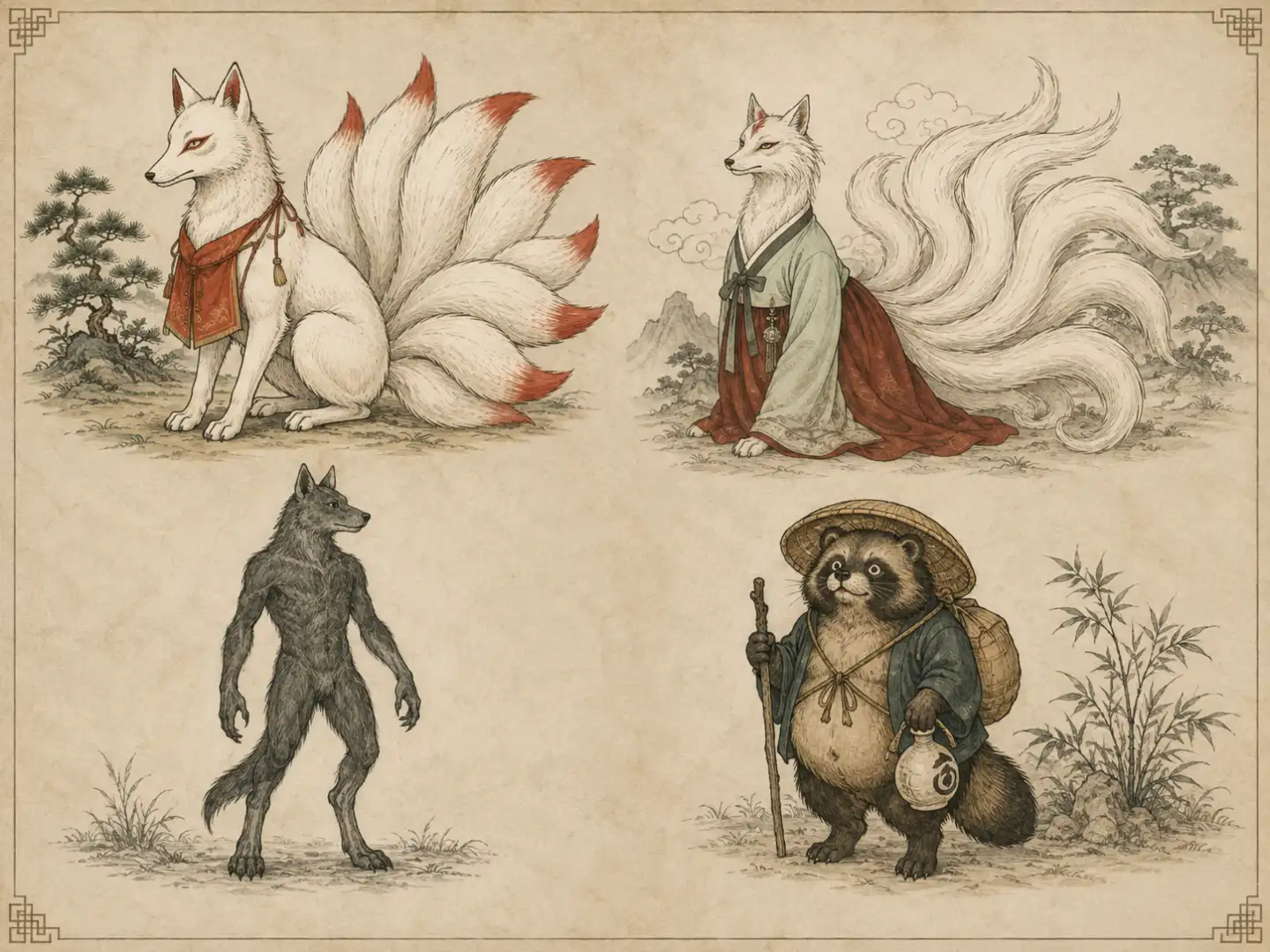
Comparative field-guide illustration of Kitsune, Korean nine-tailed fox, generic Dogman silhouette, and tanuki, without depicting culturally sensitive Navajo ritual imagery.
How to Investigate a Possible Kitsune Sighting
The first minute after a strange encounter may be more valuable than the next month of speculation.
A witness who preserves the scene can create a useful case even if the animal eventually proves ordinary.
A witness who immediately edits the image, posts a compressed copy, and spends hours reading Kitsune stories may unintentionally destroy the best evidence.
Start with distance.
Do not chase the animal.
Do not feed it.
Do not corner it.
Wild foxes deserve the same caution whether the witness believes the animal is supernatural or not. Japanese environmental authorities specifically warn against feeding and handling Hokkaido foxes.[9]
Record the exact time.
Not around midnight.
Write 12:17 a.m.
Record the location.
A road name, GPS coordinate, trail marker, intersection, shrine, or identifiable landmark can later allow the sightline to be reconstructed.
Record the direction.
A light behind the animal means little until someone knows what stood behind the animal.
A highway may be hidden beyond the trees.
A house may sit across water.
A tower may carry a warning light.
Preserve the original photograph or video.
Do not overwrite it.
Do not save only a screenshot.
Do not crop the only copy.
Every generation of copying can remove information.
Photograph the environment after the animal leaves.
Take a wide image from the place where the witness stood.
Then photograph the background.
Branches.
Fences.
Reflective signs.
Roads.
Water.
Windows.
Streetlights.
These objects may explain a feature that looked attached to the animal.
Measure the sighting.
How long was the creature visible?
How far away was it?
Was there a known object nearby that can establish scale?
A fence post is more useful than saying the fox looked huge.
If another person saw the animal, interview that person separately.
Do not ask:
Did you see all those tails?
Ask:
Describe the rear half of the animal.
Leading questions can make two witnesses sound independent when they are actually sharing one interpretation.
Tracks deserve the same discipline.
Photograph them directly from above.
Include a ruler or other reliable scale.
Photograph the entire trackway rather than one dramatic print.
A sequence reveals stride, direction, foot placement, and gait.
One isolated mark can be almost anything.
If fur, scat, blood, or tissue appears, do not treat it like a souvenir.
Photograph it in place.
Avoid direct contact.
Biological evidence becomes valuable only when contamination and origin can be assessed.
Then split the account into two columns.
Observed:
fox-like animal
light-colored coat
visible for seven seconds
long tail
second tail-like shape uncertain
small light behind animal
animal entered trees
Interpreted:
white Kitsune
multiple tails
foxfire
supernatural disappearance
The first column preserves the case.
The second preserves the witness’s meaning.
Both matter.
Only one should be treated as direct observation.
Finally, attack the favorite explanation.
If the witness believes it was a Kitsune, search aggressively for normal foxes, dogs, reflections, branches, camera artifacts, and other possibilities.
If the investigator believes it was an ordinary fox, search equally hard for details that do not fit.
A conclusion deserves confidence only after its easiest escape routes have been tested.
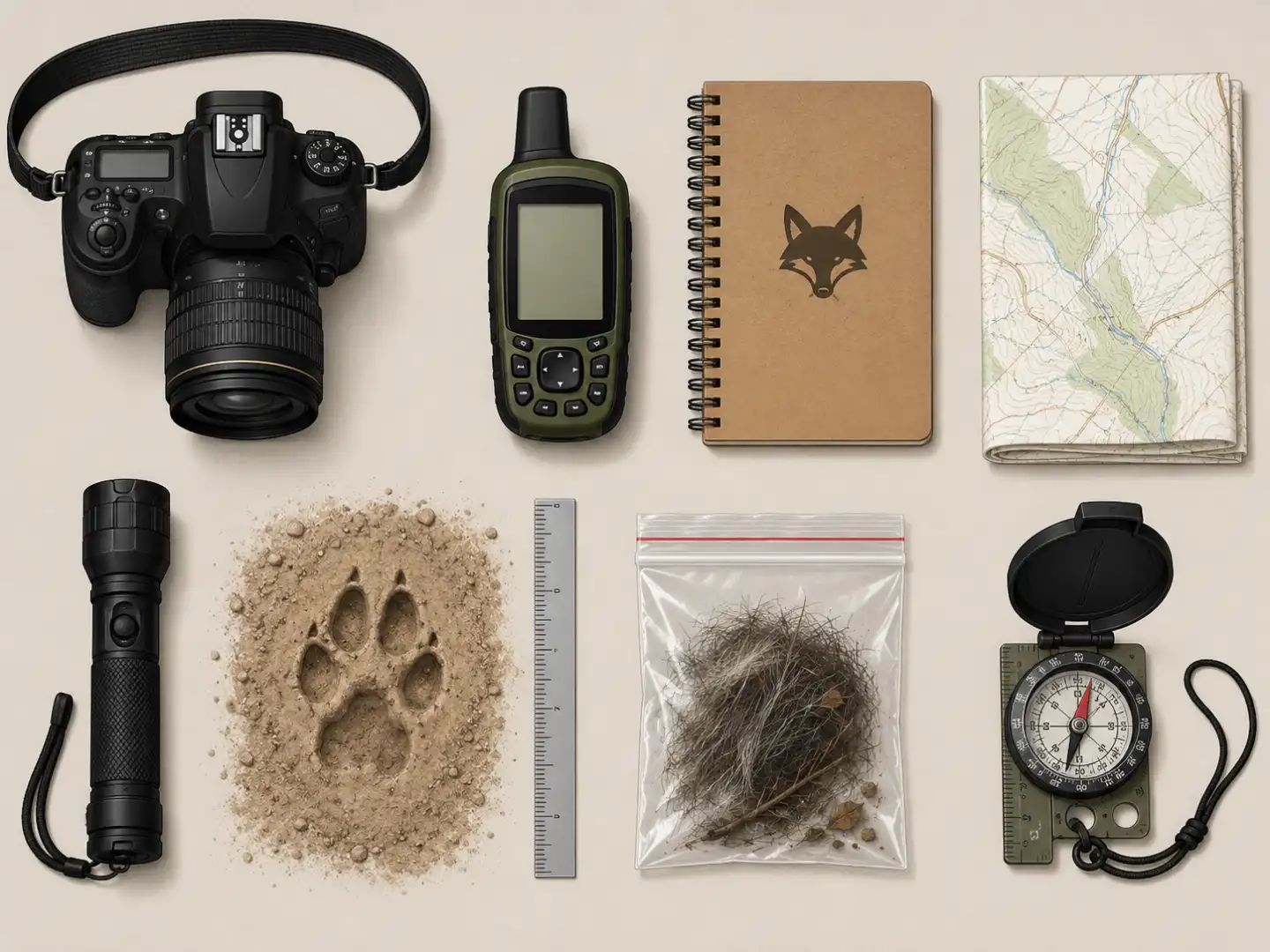
Practical cryptid field kit for documenting a fox-like sighting.
Where the Kitsune Story Still Lives
The supernatural animal remains unverified.
The geography does not.
Several places in Japan allow the different branches of Kitsune tradition to become visible in stone, landscape, ritual, and art.
Fushimi Inari Taisha in Kyoto belongs to the sacred side of the fox.
The shrine dates the enshrinement of Inari Okami there to 711 and identifies itself as the head shrine of the Inari tradition.[2][3]
The fox statues should be approached as religious imagery, not cryptid props.
Look at where they stand.
Notice their relationship to gates, offerings, paths, and shrine architecture.
The surrounding context explains more than the fox alone.
Sesshō-seki in Nasu belongs to the darker branch.
Here the visitor can stand in the same volcanic landscape attached to the Tamamo-no-Mae legend, while government interpretation explains the toxic gases beneath the story.[1]
The site joins geology and folklore without requiring either one to impersonate the other.
Ōji in Tokyo belongs to foxfire.
Hiroshige’s 1857 imagery preserves the old association among foxes, kitsunebi, New Year, agriculture, and Ōji Inari.[7]
The modern city is not the landscape Hiroshige saw.
That difference is part of the research.
Old stories survive while roads, buildings, rivers, fields, and sightlines change around them.
Nasu also shows that folklore is not simply an artifact behind museum glass.
The official Tochigi tourism site continues to document the Sesshōseki Gojinka Festival, including the torch procession and nine-tailed fox-related performance tradition at the stone.[15]
A legend can remain alive without anyone proving its supernatural event.
People walk the route.
Torches burn.
The fox stays in the story.
That may be the strongest explanation for why Kitsune survives so easily in modern culture.
It never depended on one sighting.
It has places to live.
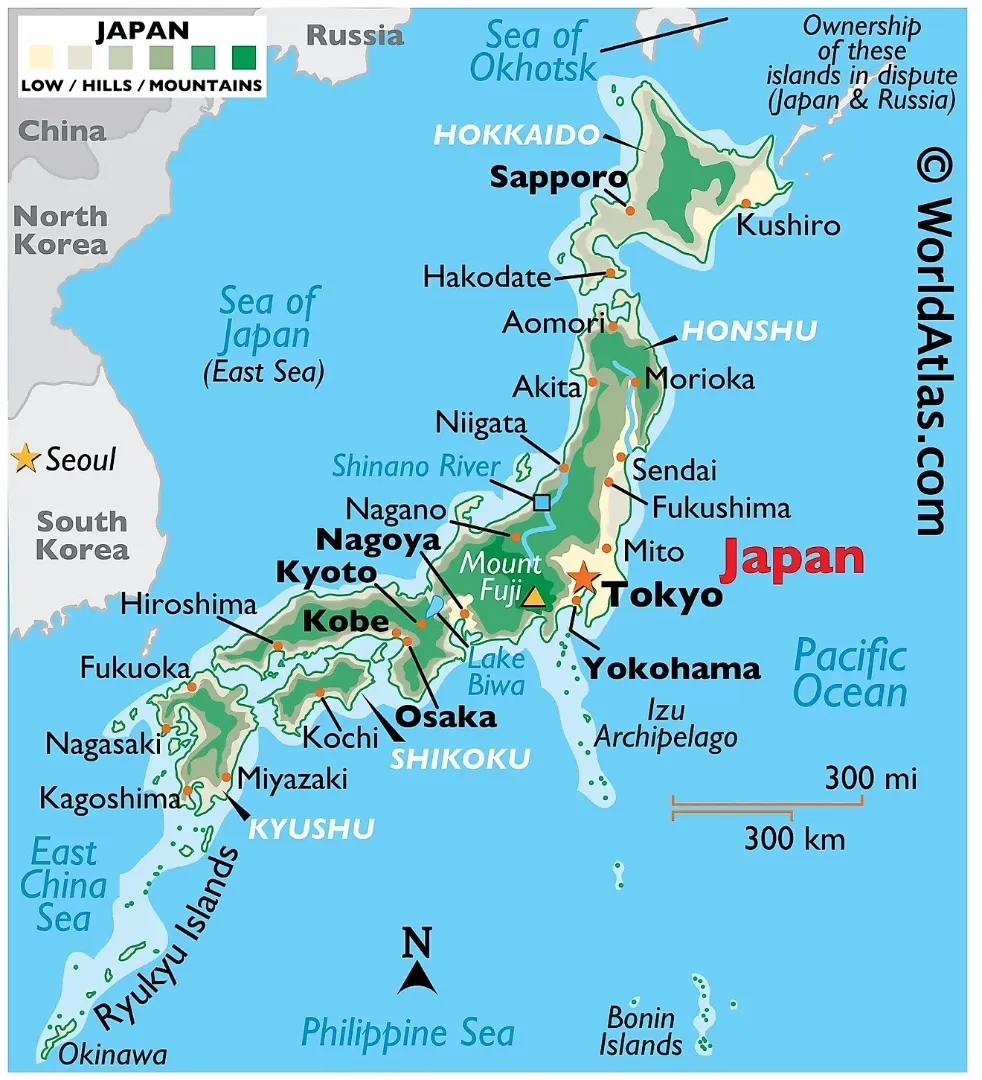
Japan map Kyoto Nasu Tochigi Oji Tokyo
What the Evidence Says About the Kitsune
The case becomes clearer when the evidence is separated by category.
Historical evidence for Kitsune folklore is strong.
The Metropolitan Museum preserves fox-transformation imagery from the seventeenth century and later Tamamo-no-Mae works.[4][6][18]
The British Museum preserves nineteenth-century nine-tailed fox imagery by Kuniyoshi and a Hokusai drawing involving a nine-tailed fox spirit.[5][19]
Religious evidence is strong.
Fushimi Inari Taisha documents the shrine’s long history, the scale of Inari worship, and the role of foxes as messengers or kindreds rather than the deity itself.[2][3]
Historical evidence for fox-possession belief is strong.
Academic research documents such interpretations in medieval and later Japanese contexts.[8]
Environmental evidence at Nasu is strong.
Government interpretation documents volcanic gases around the Killing Stone site.[1]
Zoological evidence for real foxes is strong.
The Ministry of the Environment documents the Hokkaido red fox and provides physical measurements and safety guidance.[9]
Evidence that modern people still tell Kitsune encounter stories is easy to find.
Paranormal communities continue to collect and share them.[20]
The final category looks different.
No verified biological specimen establishes a supernatural Kitsune species.
No accepted evidence demonstrates a fox physically transforming into a human.
No confirmed wild population of nine-tailed foxes has been documented.
No reproducible experiment demonstrates supernatural foxfire.
No modern encounter cited here supplies the biological confirmation needed to change those conclusions.
That does not erase the mystery.
It defines it.
The strongest case is not that a hidden nine-tailed mammal has survived undetected in Japan.
The strongest case is that one ordinary animal has carried an extraordinary amount of human meaning.
Foxes move along field edges.
Stories move across centuries.
Sometimes the paths cross.
The broken stone at Nasu is a perfect example.
The fracture was real.
The escaping spirit was folklore.
Both events entered the same photograph.
Continue Through the Cryptid Files
The Kitsune sits in a rare position between wildlife, religion, folklore, historical art, paranormal testimony, and modern cryptid culture.
That makes it difficult to classify and unusually rewarding to investigate.
The safest conclusion is not that every Kitsune story has been explained.
Many cannot be reconstructed at all.
Their witnesses are gone.
Their landscapes have changed.
Some survive only through art, ritual, theater, or later retelling.
What can be tested should be tested.
What belongs to folklore should be labeled as folklore.
What remains anecdotal should remain anecdotal.
What is verified deserves to stand on its own.
For Kitsune-inspired artwork and products, explore the Kitsune Cryptid collection.
To move beyond the fox into other legendary creatures, browse the Cryptids collection.
For historical cases, sightings, folklore, and evidence-based investigations, continue through the Cryptid Files.
You can also use A Cryptozoologist’s Field Guide: The A-Z of 50+ Legendary Cryptids as a wider map of creatures whose stories sit somewhere between landscape and belief.
A fox disappearing into trees may leave nothing behind but tracks.
A Kitsune story leaves much more.
The work begins by learning which evidence belongs to which creature.
References
[1] Ministry of Land, Infrastructure, Transport and Tourism, Japan. “The Legend of the Nine-tailed Fox and the ‘Killing Stone.’” Japan Tourism Agency Multilingual Interpretation Database.
https://www.mlit.go.jp/tagengo-db/en/R2-00679.html
[2] Fushimi Inari Taisha. “Fushimi Inari Taisha.” Official Website.
https://inari.jp/en/
[3] Fushimi Inari Taisha. “FAQ.” Official Website.
https://inari.jp/en/faq/
[4] The Metropolitan Museum of Art. “Tale of the Fox, Kitsune no sōshi.” 1669.
https://www.metmuseum.org/art/collection/search/845140
[5] British Museum. Utagawa Kuniyoshi. “Sangoku yōko zue, The Magic Fox of Three Countries.” 1849–1850.
https://www.britishmuseum.org/collection/object/A_2008-3037-07004
[6] The Metropolitan Museum of Art. “Tamamo no Mae and the Archer Miura Kuranosuke.” 1835.
https://www.metmuseum.org/art/collection/search/54323
[7] The Metropolitan Museum of Art. Utagawa Hiroshige. “New Year’s Eve Foxfires at the Changing Tree, Ōji.” circa 1857.
https://www.metmuseum.org/art/collection/search/55553
[8] Mieda, Akiko, and Keiko Wells. “Fox Possession in Medieval Japan: The Reality of the Belief and Treatment of the Illness as a Shadow of Political Unrest.” Ritsumeikan University Research Repository, 2024.
https://ritsumei.repo.nii.ac.jp/records/2000786
[9] Ministry of the Environment, Japan. “Animals of Shiretoko: Mammals Living in the Mountains.” Shiretoko Rausu Visitor Center.
https://policies.env.go.jp/park/shiretoko/rausu-vc/nature/mammal-land/
[10] Smyers, Karen A. “‘My Own Inari’: Personalization of the Deity in Inari Worship.” Japanese Journal of Religious Studies, Vol. 23, No. 1–2. Nanzan Institute for Religion and Culture.
https://nirc.nanzan-u.ac.jp/nfile/2588
[11] The Japan Foundation. “Misty Mansion.” Stage Beyond Borders, 2024.
https://stagebb.jpf.go.jp/es/stage/misty-mansion/
[12] National Diet Library, Japan. “Looking Back at Bridal Culture: The History and Culture of Weddings.” Books Kaleidoscope, 2026.
https://www.ndl.go.jp/kaleido/38
[13] McCurry, Justin. “Japan’s ‘Killing Stone’ Splits in Two, Releasing Superstitions Amid the Sulphur Springs.” The Guardian, March 7, 2022.
https://www.theguardian.com/world/2022/mar/07/japans-killing-stone-splits-in-two-releasing-superstitions-and-toxic-gases
[14] Tochigi Prefecture Tourism and Local Products Association. “Sessho-seki, Killing Stone.” Visit Tochigi.
https://www.visit-tochigi.com/plan-your-trip/things-to-do/936/
[15] Tochigi Prefecture Tourism and Local Products Association. “Nasu Seshoseki Gojinka Festival.” Visit Tochigi.
https://www.visit-tochigi.com/plan-your-trip/things-to-do/1474/
[16] Government of Japan. “Umbrella-Shaped Yokai.” Highlighting Japan, June 2023.
https://www.gov-online.go.jp/eng/publicity/book/hlj/html/202306/202306_08_en.html
[17] Warner Bros. “Akira Kurosawa’s Dreams.” Official Movie Page.
https://www.warnerbros.com/movies/akira-kurosawas-dreams
[18] The Metropolitan Museum of Art. Yashima Gakutei. “The Warrior Miura-no-suke Confronting the Court Lady Tamamo-no-mae as She Turns into an Evil Fox with Nine Tails.” Late 1820s.
https://www.metmuseum.org/art/collection/search/54822
[19] British Museum. Katsushika Hokusai. “Fumei Chōja and a Fox-Spirit.”
https://www.britishmuseum.org/collection/object/A_2020-3015-19
[20] Reddit, r/Paranormal. “Kitsune in the Modern Day” and related community encounter discussions. Used only as evidence that contemporary anecdotal Kitsune claims continue to circulate, not as evidence for a biological or supernatural species.
https://www.reddit.com/r/Paranormal/comments/b16u58/kitsune_in_the_modern_day/